
Hearing Loss Information Guide UK
Supporting people with hearing loss, hearing impairment and deafness across the United Kingdom.
Whether you’ve recently noticed changes in your hearing, have lived with hearing loss for years, or are supporting a family member or friend, this guide has been created to provide clear, practical and trustworthy information.
We’ll explain the different types of hearing loss, common symptoms, communication tips, support available across the UK and everyday tools that can make life easier, including personalised hearing loss cards.
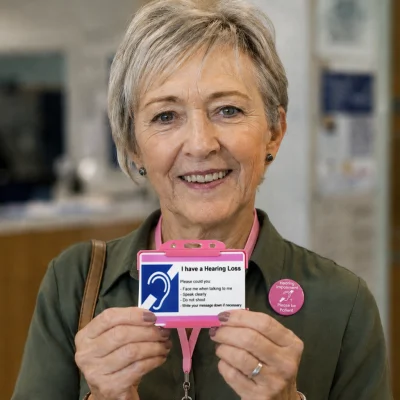
Understand Hearing Loss
Learn about symptoms, causes and the different types of hearing loss.
Communication Tips
Simple ways to make everyday conversations easier.
UK Support
Useful organisations, charities and NHS information.
Hearing Loss Cards
Discover how personalised hearing loss cards help everyday communication.
Welcome to our Hearing Loss Information Guide
Our aim is to provide reliable hearing loss information that helps people better understand hearing impairment, communication support and the services available across the UK.
Hearing loss affects millions of people throughout the United Kingdom, yet no two people’s experiences are exactly the same.
For some, hearing changes happen gradually over many years. Others may notice a sudden reduction in hearing after illness, injury or prolonged exposure to loud noise. Some people are born deaf or experience hearing loss from an early age, while others first notice difficulties later in life.
Whatever your circumstances, you’re not alone.
Living with hearing loss can sometimes feel frustrating, particularly when communication becomes difficult in busy places such as supermarkets, restaurants, hospitals or on public transport. Family members, friends and colleagues may not always realise that you’re struggling to hear, simply because hearing loss is often an invisible condition.
The purpose of this guide is to provide practical, easy-to-understand information that can help you better understand hearing loss, communicate more confidently and discover the support available throughout the UK.
Throughout this guide you’ll also find links to trusted organisations including the NHS, RNID, Age UK and Hearing Dogs for Deaf People, together with practical communication tools such as personalised hearing loss cards.
Whether you’re looking for answers after a recent diagnosis or have been living with hearing loss for many years, we hope this guide provides information that’s genuinely useful.
Quick Navigation
What is Hearing Loss?
Hearing loss is the partial or complete reduction in a person’s ability to hear sounds. It can affect one ear or both ears and may develop gradually over many years or occur suddenly due to illness, injury or another medical condition. Hearing loss affects people of all ages, from children and young adults to older people, and every person’s experience is unique.
Some people notice only a slight change in their hearing, while others may find that conversations become increasingly difficult to follow, particularly in busy environments where there is background noise. Everyday situations such as shopping, travelling on public transport, visiting a GP surgery or speaking with family and friends can become more challenging when speech is difficult to hear clearly.
Hearing loss is often described as an invisible disability because it usually cannot be seen by others. Someone may appear to ignore a conversation, answer incorrectly or ask people to repeat themselves, when in reality they simply have not heard what was said. This misunderstanding can sometimes lead to frustration for both the person with hearing loss and those around them.
There are many different causes of hearing loss. Some people experience hearing changes as part of the natural ageing process, while others may develop hearing loss following prolonged exposure to loud noise, certain infections, injury, genetic conditions or other medical issues. The degree of hearing loss can range from mild to profound and may affect communication in different ways.
For many people, hearing loss does not mean complete deafness. Some sounds may still be heard clearly, while others—particularly speech in noisy environments—can become much harder to distinguish. This is why hearing loss can vary considerably from one person to another.
If you have noticed a recent change in your hearing, it is important not to ignore it. Sudden hearing loss, persistent ear pain, discharge from the ear, dizziness or rapidly worsening hearing should always be assessed promptly by a healthcare professional. Even gradual hearing changes are worth discussing with your GP or an audiologist, as early assessment can help identify the cause and determine whether treatment or hearing support may be beneficial.
Many people find that small changes make everyday communication easier. Facing the person you are speaking to, reducing background noise where possible and allowing extra time for conversations can all help. Some people also choose to carry a hearing loss communication card, which discreetly explains their hearing needs during appointments, shopping, travelling and other everyday situations.
If you are looking for reliable medical information, hearing tests or advice about hearing loss, the following organisations provide excellent resources:
- NHS – Information about hearing loss, symptoms, diagnosis, hearing tests and available treatments.
- RNID (Royal National Institute for Deaf People) – Practical guidance, communication advice, hearing checks and support for people living with hearing loss, tinnitus and deafness.
- Age UK – Advice and information for older adults experiencing age-related hearing loss and communication difficulties.
If you’re interested in practical communication tools for everyday life, you can also explore our Personalised Hearing Loss Cards, designed to help explain your hearing needs clearly and confidently in situations where communication may otherwise be difficult.
Signs & Symptoms of Hearing Loss
Hearing loss can develop gradually or happen suddenly, depending on the underlying cause. In many cases, people do not realise their hearing has changed until family members, friends or colleagues begin to notice the signs.
The symptoms of hearing loss can vary from person to person. Some people may only struggle in busy environments, while others find everyday conversations increasingly difficult to follow. Hearing loss may affect one ear or both ears and can range from mild to profound.
Common Signs of Hearing Loss
Some of the most common signs and symptoms include:
- Frequently asking people to repeat themselves.
- Finding conversations difficult in busy places such as restaurants or cafés.
- Turning the television or radio volume up higher than others prefer.
- Struggling to hear people speaking on the telephone.
- Feeling that other people are mumbling rather than speaking clearly.
- Missing doorbells, alarms or other everyday sounds.
- Finding group conversations difficult to follow.
- Feeling tired or mentally exhausted after long conversations.
- Avoiding social situations because listening becomes stressful.
- Difficulty hearing higher-pitched sounds, such as birds singing or children’s voices.
Not everyone experiences the same symptoms, and hearing loss can affect people differently depending on its cause and severity.
Hearing Loss Often Develops Gradually
One reason hearing loss is sometimes overlooked is that it often develops slowly over time. The brain adapts to gradual changes, meaning many people don’t notice their hearing has reduced until it begins to affect everyday life.
It is often family members or close friends who first notice changes, such as asking people to repeat themselves more often or increasing the television volume.
When Should You Seek Medical Advice?
If you notice persistent changes in your hearing, it is a good idea to arrange an appointment with your GP or another healthcare professional. They can assess your symptoms and, if appropriate, refer you for further hearing tests.
You should seek urgent medical advice if you experience:
- Sudden hearing loss in one or both ears.
- Hearing loss accompanied by severe dizziness.
- Persistent ear pain or discharge.
- Sudden hearing changes following a head injury.
Early assessment can help identify the cause of hearing loss and determine whether treatment or hearing support may improve your hearing or quality of life.
Everyday Challenges
Many people living with hearing loss say that the emotional impact can sometimes be just as challenging as the hearing loss itself. Misunderstandings, frustration and reduced confidence may affect everyday situations such as shopping, travelling, attending appointments or meeting new people.
Simple adjustments can often make communication easier. Facing the person you are speaking to, reducing background noise where possible and allowing extra time for conversations can make a significant difference.
Many people also find it reassuring to carry a personalised hearing loss card. Showing a hearing loss card during appointments, while travelling or when visiting shops and public places can quickly explain your communication needs without needing to repeat yourself. If you’re interested in this type of communication aid, you can view our Personalised Hearing Loss Cards, which are designed to help improve everyday communication.
Where to Find More Information
If you are concerned about changes in your hearing, these trusted organisations provide reliable advice and support:
- NHS – Information about hearing loss, symptoms, diagnosis, hearing tests and available treatments.
- RNID (Royal National Institute for Deaf People) – Practical guidance, communication advice, hearing checks and support for people living with hearing loss, tinnitus and deafness.
- Age UK – Advice and information for older adults experiencing age-related hearing loss and communication difficulties.
💡Did You Know?
Hearing loss doesn’t always mean complete deafness.
Many people can hear sounds but find it difficult
to understand speech, particularly in noisy
environments.
This is why someone may appear to hear you
but still struggle to follow a conversation.
Types of Hearing Loss
Hearing loss is not the same for everyone. There are several different types of hearing loss, and understanding the differences can help explain why people experience hearing difficulties in different ways.
Some people may have temporary hearing loss caused by an ear infection or a build-up of earwax, while others may experience permanent hearing loss due to ageing, illness, injury or damage to the inner ear.
Only a qualified healthcare professional or audiologist can diagnose the type and cause of hearing loss, but understanding the main types can help you recognise why hearing may change over time.
Conductive Hearing Loss
Conductive hearing loss occurs when sound cannot travel efficiently through the outer or middle ear before reaching the inner ear.
Common causes may include:
- Earwax build-up
- Ear infections
- Fluid behind the eardrum
- A perforated eardrum
- Problems affecting the tiny bones within the middle ear
In many cases, conductive hearing loss can improve once the underlying cause has been treated. Treatment will depend on the individual diagnosis and should always be discussed with a healthcare professional.
Sensorineural Hearing Loss
Sensorineural hearing loss is the most common form of permanent hearing loss.
It occurs when there is damage to the inner ear (cochlea) or the hearing nerve that carries sound signals to the brain.
Possible causes include:
- Age-related hearing loss
- Long-term exposure to loud noise
- Certain illnesses
- Some medications
- Genetic conditions
- Head injuries
Although sensorineural hearing loss is often permanent, many people benefit from hearing aids, assistive listening technology and communication support.
Mixed Hearing Loss
Mixed hearing loss is a combination of conductive hearing loss and sensorineural hearing loss.
This means a person has problems affecting both the outer or middle ear and the inner ear or hearing nerve.
Treatment depends on the underlying causes and may involve a combination of medical treatment, hearing aids or other support.
Temporary Hearing Loss
Not all hearing loss is permanent.
Temporary hearing loss may occur due to:
- Ear infections
- Earwax
- Changes in air pressure
- Fluid in the ear
- Certain illnesses
If your hearing suddenly changes or becomes noticeably worse, it is important to seek medical advice rather than assuming it will improve on its own.
Permanent Hearing Loss
Permanent hearing loss may develop gradually over time or occur following illness, injury or other medical conditions.
Although permanent hearing loss cannot always be reversed, there are many ways to improve communication and maintain independence.
These may include:
- Hearing aids
- Hearing loops
- Communication support
- Lipreading
- Assistive technology
- Hearing loss communication cards
Many people continue to lead active, independent lives with the right support and adjustments.
Everyone’s Hearing Journey Is Different
No two people experience hearing loss in exactly the same way.
Some people only notice difficulties in noisy environments, while others may struggle during everyday conversations or telephone calls. The degree of hearing loss does not always reflect how challenging communication feels, as every situation is different.
If you have concerns about your hearing or have noticed changes in your ability to hear, it is always advisable to arrange a hearing assessment with your GP or an audiologist. Early assessment can help identify the cause of hearing loss and ensure you receive the most appropriate advice and support.
Many people also choose to carry a personalised hearing loss card to explain their communication needs during appointments, shopping, travelling and other everyday situations. Our Personalised Hearing Loss Cards can be customised with your own wording and optional emergency contact details, making them a practical communication aid for everyday life.
💡Did You Know?
Not all hearing loss is permanent.
Some forms of hearing loss, such as those caused by earwax or certain ear infections, may improve after appropriate treatment. This is why it is important to seek medical advice rather than assuming hearing loss is permanent.
🩺 Need a Hearing Test?
If you’ve noticed changes in your hearing, speak to your GP or visit the NHS hearing loss pages for information about hearing tests, referrals and available treatment options.
Diagnosis & Hearing Tests
If you’ve noticed changes in your hearing, the first step is to seek professional advice. Hearing loss can have many different causes, and an early assessment can help identify whether your hearing changes are temporary, permanent or caused by an underlying condition that may require treatment.
Many people delay having their hearing checked because they assume hearing loss is simply part of getting older. While age-related hearing loss is common, hearing changes can also result from ear infections, excessive earwax, exposure to loud noise, certain medications or other medical conditions. Having your hearing assessed can provide reassurance and help you understand the most appropriate next steps.
Visiting Your GP
If you are concerned about your hearing, you can usually begin by making an appointment with your GP. They may ask questions about:
- When you first noticed changes in your hearing.
- Whether one or both ears are affected.
- Any pain, dizziness or ringing in the ears (tinnitus).
- Your medical history.
- Any exposure to loud noise at work or during leisure activities.
- Current medications that may affect hearing.
Your GP may examine your ears to check for visible problems such as earwax build-up or signs of infection. If necessary, they may refer you to an audiology service or an ear, nose and throat (ENT) specialist for further assessment.
What Happens During a Hearing Test?
A hearing test is painless, straightforward and designed to measure how well you hear different sounds and speech.
Depending on your individual circumstances, your assessment may include:
- Questions about your hearing and medical history.
- An examination of your ears.
- Listening to sounds at different pitches and volumes using headphones.
- Speech recognition tests.
- Additional tests if further investigation is required.
The results help determine the type and degree of hearing loss and whether treatment, hearing aids or other forms of support may be appropriate.
Why Early Diagnosis Matters
Seeking help early can make a significant difference. Identifying hearing loss at an early stage allows you to access support, explore treatment options where appropriate and make practical adjustments that may improve everyday communication.
Many people find that taking action early helps them remain confident and independent at home, at work and in social situations.
Preparing for Your Appointment
Before attending a hearing assessment, it may be helpful to think about the situations where you experience the greatest difficulty hearing.
For example:
- Conversations in busy restaurants.
- Telephone calls.
- Meetings at work.
- Watching television.
- Hospital or GP appointments.
- Public transport announcements.
Making a few notes beforehand can help you explain your concerns more clearly during your appointment.
Some people also choose to carry a personalised hearing loss card. This can be useful during medical appointments, hospital visits or other situations where you may need to explain your communication needs quickly and discreetly.
Trusted Information
If you would like to learn more about hearing tests and diagnosis, the following resources provide reliable information:
NHS – Hearing Tests: Explains how hearing tests are carried out, what to expect during your appointment and how to access NHS hearing services.
RNID – Hearing Loss Information: Practical guidance on recognising hearing loss, hearing checks and available support services.
Remember, if you experience sudden hearing loss, severe ear pain, persistent ear discharge or hearing loss following a head injury, seek urgent medical advice without delay.
💡Did You Know?
A hearing test is completely painless and usually takes less than an hour. The results help identify both the type and degree of hearing loss, allowing healthcare professionals to recommend the most appropriate treatment or support.
🩺 Helpful NHS Resources
🩺 Booking a Hearing Test
If you’ve noticed changes in your hearing, don’t wait for the problem to become worse. Your GP can arrange further assessment if appropriate, and the NHS explains what happens during a hearing test and what to expect.
🩷 Communication Support
🪪 Hearing Loss Communication Cards
If you have difficulty hearing during GP appointments, hospital visits, pharmacies or other everyday situations, a personalised hearing loss card can help explain your communication needs clearly and quickly.
Communication Tips for Everyday Life
Good communication can make a significant difference to someone living with hearing loss. Small adjustments often help conversations become clearer, less stressful and more enjoyable for everyone involved.
Every person experiences hearing loss differently, so there is no single approach that works for everyone. The most important thing you can do is ask what works best for the individual and be patient if they need extra time during conversations.
Face the Person When Speaking
Many people with hearing loss rely on facial expressions and lip movements to help understand what is being said.
Whenever possible:
- Face the person directly.
- Avoid covering your mouth while speaking.
- Maintain eye contact where appropriate.
- Ensure your face is well lit rather than standing with bright light behind you.
These simple changes can make conversations much easier to follow.
Speak Clearly – There’s No Need to Shout
One of the most common misunderstandings is that shouting will solve the problem.
In reality, shouting can distort speech and make it harder to understand.
Instead:
- Speak clearly.
- Use a natural pace.
- Pause between sentences if needed.
- Avoid speaking too quickly.
Reduce Background Noise
Background noise can make conversations much more difficult.
If possible:
- Turn down the television or radio.
- Move to a quieter area.
- Close unnecessary windows if outside noise is distracting.
- Avoid speaking while walking away.
Even small reductions in background noise can make speech much clearer.
Be Patient
Sometimes a person with hearing loss may ask you to repeat something.
If this happens:
- Stay calm.
- Repeat the sentence naturally.
- If necessary, rephrase it using different words.
- Don’t become frustrated if repetition is needed.
Communication works best when both people remain relaxed.
Use Written Information When Helpful
For important information such as appointment times, addresses, instructions or medication details, writing things down can help avoid misunderstandings.
Many smartphones, tablets and notebooks can also be useful communication tools.
In Public Places
Busy environments such as shops, cafés, airports and hospitals can make hearing more challenging.
Helpful tips include:
- Gain the person’s attention before speaking.
- Face them directly.
- Keep instructions clear and simple.
- Be prepared to repeat important information if requested.
Many organisations now understand the importance of accessible communication and are happy to make reasonable adjustments where possible.
At Work
Employers and colleagues can often make simple adjustments that improve communication in the workplace.
These might include:
- Choosing quieter meeting rooms.
- Sharing written agendas.
- Using captions during online meetings.
- Allowing people to sit where they can clearly see everyone speaking.
- Using hearing loop systems where available.
Open communication between employers and employees can help identify practical solutions that benefit everyone.
During Medical Appointments
Hospital and GP appointments often involve important information.
If you have hearing loss, it can help to:
- Tell reception staff that you have hearing loss.
- Ask clinicians to face you when speaking.
- Request written information where appropriate.
- Ask questions if anything is unclear.
Many people also choose to carry a personalised hearing loss card. Showing your card at reception or during appointments can quickly explain your communication needs, helping healthcare professionals communicate more effectively without needing lengthy explanations.
Travelling and Everyday Life
Communication can sometimes be more difficult while travelling.
Whether using buses, trains, airports or taxis, simple preparation can help reduce stress.
A hearing loss card can be particularly useful when asking for assistance, confirming travel information or explaining your hearing needs during unexpected situations.
Communication Is a Shared Responsibility
Living with hearing loss should never prevent someone from participating fully in everyday life.
A little patience, clear communication and greater awareness can make a significant difference to confidence, independence and overall wellbeing.
Whether you’re a family member, friend, employer, colleague or someone living with hearing loss yourself, taking a few simple steps can help create more positive and inclusive conversations for everyone.
💡Did You Know?
Many people with hearing loss can hear that someone is speaking but may struggle to understand the words, particularly in noisy environments. Speaking clearly and facing the person is often far more effective than simply speaking louder.
✅ Practical Tip
💬 Five Simple Ways to Improve Communication
✔ Face the person when speaking.
✔ Speak clearly at a natural pace.
✔ Reduce background noise where possible.
✔ Write important information down if needed.
✔ Ask how the person prefers to communicate.
🩷 Communication Support
🪪 Hearing Loss Communication Cards
In busy places such as hospitals, pharmacies, shops, banks, restaurants and public transport, it isn’t always easy to explain that you have hearing loss.
Our Personalised Hearing Loss Cards are designed to help you communicate your hearing needs quickly and clearly. Each card can be customised with your own wording and optional emergency contact details, making everyday conversations simpler and helping others understand how best to communicate with you.
🤝 Helpful Resources
Need More Communication Advice?
For additional guidance on communicating with people who are deaf or have hearing loss, visit:
Hearing Aids
For many people living with hearing loss, hearing aids can make everyday communication easier by amplifying sounds and helping improve speech clarity. Modern hearing aids are small, discreet and available in a range of styles to suit different levels of hearing loss and individual preferences.
Not everyone with hearing loss will need hearing aids, and they may not be suitable for every type of hearing problem. A hearing assessment carried out by an audiologist or hearing care professional will help determine whether hearing aids are likely to be beneficial.
How Do Hearing Aids Work?
Hearing aids use small microphones to pick up sounds from the surrounding environment. The sounds are processed electronically, adjusted to suit your hearing needs and then delivered into your ear through a small speaker.
Today’s hearing aids can do much more than simply make sounds louder. Depending on the model, they may also:
- Improve speech clarity in quieter environments.
- Reduce certain types of background noise.
- Connect to smartphones, televisions and other devices.
- Stream phone calls and audio directly to compatible hearing aids.
- Work with hearing loop systems in many public buildings.
Technology continues to improve, providing more options than ever before for people living with hearing loss.
Different Styles of Hearing Aids
There are several different styles of hearing aid, and the most suitable option will depend on your hearing assessment, lifestyle and personal preference.
Common styles include:
- Behind-the-ear (BTE)
- Receiver-in-canal (RIC)
- In-the-ear (ITE)
- In-the-canal (ITC)
- Completely-in-canal (CIC)
Your audiologist can explain the advantages and limitations of each style and recommend the most appropriate option for your hearing needs.
Adjusting to Hearing Aids
It is important to remember that hearing aids do not restore hearing to exactly the way it was before hearing loss occurred. Many people need time to adjust to new sounds and wearing hearing aids regularly.
It is perfectly normal to experience an adjustment period while your brain becomes accustomed to hearing sounds that may have been difficult to hear for some time.
Regular follow-up appointments and hearing aid adjustments can help ensure your hearing aids continue to perform as effectively as possible.
Hearing Aids and Everyday Communication
Although hearing aids can significantly improve hearing for many people, they do not remove every communication challenge.
Busy restaurants, shopping centres, railway stations and other noisy environments may still make conversations difficult. Simple communication techniques—such as facing the person speaking, reducing background noise where possible and allowing extra time during conversations—remain just as important.
Many people also choose to carry a personalised hearing loss card. Even when wearing hearing aids, a hearing loss card can quickly explain your communication needs to healthcare professionals, shop staff, transport workers or anyone else you meet during everyday life.
Looking After Your Hearing Aids
Looking after your hearing aids can help keep them working effectively.
Some useful tips include:
- Keep them clean and dry.
- Store them safely when not in use.
- Replace batteries or recharge them as recommended.
- Attend follow-up appointments if adjustments are needed.
- Contact your hearing care provider if you notice any problems.
Regular maintenance can help prolong the life of your hearing aids and ensure they continue to perform well.
Further Information
If you would like to learn more about hearing aids, hearing assessments or hearing care services, the following organisations provide reliable information:
- NHS – Information about hearing aids, hearing tests and hearing services.
- RNID – Practical advice on hearing aids, assistive technology and communication support.
- Age UK – Guidance for older adults considering hearing aids and managing hearing loss.
💡Did You Know?
The blue hearing loop symbol doesn’t mean sound is amplified through loudspeakers. Instead, it tells hearing aid users that compatible hearing aids can receive speech directly through a hearing loop system, often making conversations much clearer by reducing background noise.
🟢 Hearing Aid Advice
🩺 Thinking About Hearing Aids?
If you’re concerned about your hearing, arrange a hearing assessment with your GP or an audiologist. They can advise whether hearing aids or other forms of hearing support are appropriate for your individual needs.
🩷 Communication Support
🪪 Hearing Loops Aren’t Available Everywhere
Although many public buildings now have hearing loop systems, they aren’t available in every location.
A Personalised Hearing Loss Card can help explain your communication needs wherever you are—whether you’re visiting a GP surgery, hospital, shop, bank, restaurant or travelling on public transport.
Hearing Loops
You may have noticed the blue hearing loop symbol displayed in places such as hospitals, GP surgeries, pharmacies, banks, theatres, churches, railway stations and reception desks. This symbol indicates that a hearing loop system is available to help people who use compatible hearing aids or cochlear implants hear conversations more clearly.
Hearing loops, also known as induction loop systems, are designed to reduce background noise and improve speech clarity. They can make communication easier in environments where it might otherwise be difficult to hear, particularly in busy or noisy public places.
How Does a Hearing Loop Work?
A hearing loop works by transmitting sound directly from a microphone or public address system to compatible hearing aids or cochlear implants that are switched to the T-setting (telecoil).
Instead of picking up surrounding background noise, the hearing aid receives the speaker’s voice directly from the hearing loop system. This often results in much clearer sound and makes conversations easier to understand.
Not every hearing aid includes a telecoil, so if you’re unsure whether your hearing aid is compatible, your audiologist or hearing care provider can advise you.
Where Are Hearing Loops Used?
Hearing loop systems are commonly installed in a wide range of public buildings and customer service locations, including:
- GP surgeries
- Hospitals
- Pharmacies
- Banks and building societies
- Post offices
- Libraries
- Churches and places of worship
- Theatres and cinemas
- Community centres
- Council offices
- Railway stations
- Airports
- Reception desks
- Meeting rooms
If you see the hearing loop symbol displayed, you can ask a member of staff whether the system is available and ready to use.
Why Are Hearing Loops Important?
Background noise can make conversations difficult, even for people who wear hearing aids.
Hearing loops help by improving speech clarity, making it easier to understand important information during appointments, meetings, performances and everyday conversations.
Many organisations have installed hearing loops to help improve accessibility and create a more inclusive environment for people living with hearing loss.
The Hearing Loop Symbol
The internationally recognised hearing loop symbol is a blue sign featuring a white ear with the letter T.
The symbol tells hearing aid users that a hearing loop system may be available.
If you’re unsure how to use a hearing loop with your hearing aid, your hearing care provider or audiologist can explain how to activate the correct setting.
Hearing Loops and Communication
Although hearing loops can make conversations much clearer for many people, they are only one part of good communication.
Simple communication techniques such as facing the person when speaking, reducing background noise where possible and speaking clearly remain equally important.
Some people also choose to carry a personalised hearing loss card. While hearing loops help improve the sound you hear, a hearing loss card helps explain your communication needs to other people, particularly in places where hearing loop systems may not be available.
Together, these communication tools can help make everyday interactions more comfortable and less stressful.
Learn More
If you would like to learn more about hearing loops, hearing aids or communication support, the following organisations provide reliable information and practical guidance:
- NHS – Information about hearing aids, hearing tests and hearing services.
- RNID – Practical advice on hearing aids, assistive technology and communication support.
- Age UK – Guidance for older adults considering hearing aids and managing hearing loss.
💡Did You Know?
Modern hearing aids do much more than simply make sounds louder. Many models can connect to smartphones, televisions and hearing loop systems, helping improve communication in a wide range of everyday situations.
🟢 Hearing Loop Support
🔄 Using a Hearing Loop
If your hearing aid has a T-setting (telecoil), ask a member of staff if a hearing loop is available. They can usually tell you where it is located and whether it is switched on.
🩷 Communication Support
🪪 Hearing Aids Don’t Solve Every Situation
Even with hearing aids, some environments can still make communication difficult, particularly where there is significant background noise.
A Personalised Hearing Loss Card can complement hearing aids by helping you explain your communication needs quickly and discreetly during GP appointments, hospital visits, shopping, travelling and other everyday situations.
Hearing Loss Cards
Living with hearing loss can sometimes make everyday communication more challenging, particularly when other people are unaware that you have difficulty hearing. Because hearing loss is often an invisible disability, staff, healthcare professionals and members of the public may not immediately realise that you need them to communicate differently.
A hearing loss card is a simple communication aid designed to explain your hearing needs quickly, clearly and discreetly. Rather than repeatedly explaining that you have hearing loss, you can simply show your card to help others understand the best way to communicate with you.
Although a hearing loss card is not an official form of identification or a medical document, many people find it provides reassurance and confidence during everyday situations.
How Can a Hearing Loss Card Help?
A hearing loss card can be useful in many different situations, including:
- GP surgeries
- Hospital appointments
- Pharmacies
- Shops and supermarkets
- Banks and post offices
- Restaurants and cafés
- Public transport
- Airports
- Hotels
- Customer service desks
- Workplaces
- Schools, colleges and universities
- Leisure centres and community venues
Showing a hearing loss card can encourage people to:
- Face you when speaking.
- Speak clearly at a natural pace.
- Avoid shouting.
- Allow extra time for conversation.
- Write important information down if necessary.
These simple adjustments can make communication easier for everyone involved.
Why Carry a Hearing Loss Card?
Many people say they feel uncomfortable repeatedly explaining that they have hearing loss.
A hearing loss card removes that pressure by providing a clear and polite explanation that can be shown within seconds.
For many people, carrying a hearing loss card provides:
- Greater confidence.
- Reduced anxiety.
- Easier communication.
- Better understanding from others.
- Greater independence.
Our Personalised Hearing Loss Cards
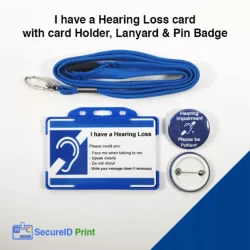
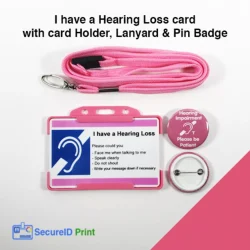
At SecureID Print Ltd, we produce professionally printed personalised hearing loss cards designed for everyday use throughout the UK.
Every card is printed on durable premium PVC and includes:
- Fully personalised wording.
- Choice of blue or pink design.
- Protective laminate overlay.
- UV Hearing Loop security logo.
- Front and back printing options.
- Optional emergency contact information on the reverse.
- Optional biodegradable card holder.
- Optional safety breakaway lanyard.
- Optional matching hearing impairment awareness pin badge.
Each card is printed to order in the UK using professional printing equipment to produce a durable, high-quality finish suitable for everyday use.
Everyday Communication Made Easier
Many customers choose to carry their hearing loss card in a wallet, purse or biodegradable card holder so it is always available when needed.
Whether attending a hospital appointment, travelling by train, ordering food in a busy restaurant or speaking to customer service staff, a hearing loss card provides a simple way of explaining your communication needs without feeling awkward or having to repeat yourself.
While hearing aids and hearing loop systems can improve hearing in many situations, a hearing loss card complements these tools by helping other people understand how they can communicate with you more effectively.
Choosing the Right Hearing Loss Card
When choosing a hearing loss card, consider whether it:
- Clearly explains your communication needs.
- Is durable enough for everyday use.
- Can be personalised.
- Includes emergency contact details if required.
- Is easy to carry.
- Offers optional accessories such as a card holder or lanyard.
A hearing loss card should be easy to read, professionally printed and designed to withstand regular daily use.
Learn More About Our Hearing Loss Cards
If you’re looking for a personalised hearing loss card that can be customised with your own wording and optional emergency contact details, you can view our full range here.
Our product page includes photographs, customer reviews, personalisation options and further information about the accessories available.
💡Did You Know?
Many people with hearing loss say that simply showing a hearing loss card reduces anxiety because they no longer need to explain their hearing needs repeatedly during everyday conversations.
🩷 Why Choose Our Hearing Loss Cards?
⭐ Why Choose Our Cards?
✔ Printed in the UK
✔ Fully personalised
✔ Premium PVC card
✔ Protective laminate overlay
✔ UV Hearing Loop security logo
✔ Optional emergency contact details
✔ Biodegradable card holder
✔ Safety breakaway lanyard
✔ Matching hearing impairment awareness pin badge
UK Hearing Loss Support & Organisations
Living with hearing loss can sometimes feel overwhelming, particularly if you’ve recently noticed changes to your hearing or received a diagnosis. Fortunately, there are many organisations across the United Kingdom that provide trusted information, practical advice and ongoing support for people who are deaf, hard of hearing or living with hearing impairment.
Whether you’re looking for medical advice, communication support, hearing technology, workplace guidance or simply want to learn more about hearing loss, the organisations below are excellent places to start.
🏥 NHS – Hearing Loss Information
The NHS provides reliable medical information about hearing loss, including symptoms, possible causes, diagnosis, hearing tests and available treatment options.
If you have recently noticed changes in your hearing, your GP can discuss your symptoms and, where appropriate, arrange further assessment through local NHS audiology services.
Visit the NHS Hearing Loss Guide
https://www.nhs.uk/conditions/hearing-loss/
🔵 RNID (Royal National Institute for Deaf People)
RNID is one of the UK’s leading charities supporting people who are deaf, have hearing loss or tinnitus.
Their website contains a wide range of practical information covering:
- Hearing loss
- Tinnitus
- Hearing aids
- Hearing loops
- Lipreading
- Communication tips
- Technology
- Hearing checks
- Emotional support
RNID also offers a free online hearing check, which may help people decide whether they should arrange a professional hearing assessment.
Visit RNID
❤️ Age UK
Age-related hearing loss is extremely common, and Age UK provides clear, practical advice designed specifically for older adults.
Their resources include information about:
- Recognising hearing loss
- NHS hearing services
- Hearing aids
- Everyday communication
- Living independently
Age UK also offers wider advice covering health, wellbeing and support services for older people.
Visit Age UK
🦮 Hearing Dogs for Deaf People
Hearing Dogs for Deaf People is a UK charity that trains hearing dogs to support deaf people in their everyday lives.
The charity also provides advice, information and community support for people living with hearing loss.
Their website explains how hearing dogs can assist by alerting owners to important sounds such as:
- Doorbells
- Smoke alarms
- Alarm clocks
- Baby monitors
- Visitors
- Emergency alarms
Visit Hearing Dogs
https://www.hearingdogs.org.uk/
💼 Access to Work
If hearing loss affects your job or workplace communication, the Government’s Access to Work scheme may be able to provide practical support.
Depending on your circumstances, support may include:
- Specialist equipment
- Communication support
- Workplace adjustments
- Travel assistance
- Other practical help
If you’re employed or starting work, it’s worth exploring what support may be available.
Visit Access to Work
https://www.gov.uk/access-to-work
🤝 Local Hearing Services
Many local NHS trusts provide audiology departments offering:
- Hearing assessments
- Hearing aid fittings
- Hearing aid repairs
- Ear care services
- Follow-up appointments
Your GP or local NHS website can advise which services are available in your area.
Practical Communication Support
Alongside professional medical advice and hearing support services, many people find it helpful to carry a personalised hearing loss card.
A hearing loss card can quickly explain your communication needs during GP appointments, hospital visits, shopping, travelling, banking or other everyday situations where communication may otherwise be difficult.
Our Personalised Hearing Loss Cards are professionally printed in the UK and can be customised with your own wording, optional emergency contact details, protective laminate overlay, UV Hearing Loop security logo and a choice of practical accessories designed for everyday use.
👉 View Personalised Hearing Loss Cards
Remember — You’re Not Alone
Hearing loss affects millions of people across the UK, and support is available.
Whether you’re arranging your first hearing test, adjusting to hearing aids, learning new communication techniques or simply looking for practical ways to make everyday life easier, organisations such as the NHS, RNID and Age UK can provide trusted guidance and support every step of the way.
💡Did You Know?
Many people wait several years before seeking help for hearing loss. Arranging a hearing assessment early can help identify the cause of hearing changes and provide access to advice, treatment or communication support sooner.
🤝 Helpful Resources
🌐 Trusted UK Organisations
✔ NHS – Medical advice and hearing services
✔ RNID – Hearing loss support, hearing checks and communication advice
✔ Age UK – Information for older adults experiencing hearing loss
✔ Hearing Dogs for Deaf People – Assistance dogs and community support
✔ GOV.UK Access to Work – Workplace support and funding
Benefits & Support Available
💼 Access to Work
If hearing loss affects your job, the UK government’s Access to Work scheme may be able to provide support such as:
- Communication support during meetings.
- Specialist equipment.
- Assistive listening devices.
- Workplace adjustments.
- Travel support in some circumstances.
Learn more: Access to Work >
♿ Personal Independence Payment (PIP)
Some people with hearing loss may qualify for Department for Work and Pensions‘s Personal Independence Payment (PIP) if their condition has a significant impact on daily living or mobility. Eligibility is based on how your condition affects you, rather than on a diagnosis alone.
Official guidance: Personal Independence Payment (PIP) >
💷 Attendance Allowance
If you’re over State Pension age and have care or supervision needs because of a disability or health condition, you may be eligible for Attendance Allowance.
Official guidance: Attendance Allowance >
🏠 Council Tax Reduction
Some people with disabilities or low incomes may qualify for help with Council Tax through their local authority. The rules vary depending on where you live.
Find your local council: Find your local council >
🚆 Disabled Person’s Railcard
If you meet the eligibility criteria, you may be able to apply for a Disabled Person’s Railcard, which offers discounted rail travel for you and, in many cases, a companion.
Learn more: Disabled Persons Railcard >
🎟️ Cinema and Leisure Discounts
Some cinemas participate in the CEA Card scheme, allowing a carer or companion to accompany a disabled customer free of charge where eligibility criteria are met.
Find out more: CEA Card >
🤝 Additional Support
If you’re unsure what support may be available, organisations such as RNID and Age UK can provide information about hearing loss, communication support and services that may be available in your area.
Frequently Asked Questions
We hope this hearing loss information has answered many of your questions and helped you better understand the support available.
What is hearing loss?
Hearing loss is a partial or complete reduction in the ability to hear sounds. It can affect one or both ears and may develop gradually over time or occur suddenly. Hearing loss affects people of all ages and can range from mild to profound.
What causes hearing loss?
Hearing loss can have many causes, including age-related hearing changes, prolonged exposure to loud noise, ear infections, excessive earwax, injury, certain medications and some medical conditions. A healthcare professional can help determine the underlying cause.
Is hearing loss always permanent?
No. Some forms of hearing loss are temporary and may improve after treatment, such as hearing loss caused by earwax or certain ear infections. Other forms may be permanent and require ongoing support.
What are the early signs of hearing loss?
Early signs often include asking people to repeat themselves, struggling to hear conversations in noisy places, turning the television volume up louder than usual, finding telephone conversations difficult or feeling tired after social situations because listening requires extra concentration.
Should I see my GP if I think I have hearing loss?
Yes. If you notice changes in your hearing, it is advisable to arrange an appointment with your GP or another healthcare professional. They can assess your symptoms and, if appropriate, refer you for a hearing assessment.
What happens during a hearing test?
A hearing test is painless and usually involves listening to sounds at different pitches and volumes while wearing headphones. Additional speech recognition or other hearing assessments may also be carried out depending on your individual circumstances.
Can hearing aids restore normal hearing?
Hearing aids can significantly improve hearing and communication for many people, but they do not restore hearing exactly as it was before hearing loss occurred. They work best alongside good communication techniques and appropriate support.
What is a hearing loop?
A hearing loop, also known as an induction loop system, transmits sound directly to compatible hearing aids or cochlear implants using the telecoil (T-setting). This helps reduce background noise and improve speech clarity in many public places.
Where can I find hearing loops?
Hearing loops are commonly available in hospitals, GP surgeries, pharmacies, banks, theatres, churches, council offices, railway stations and many public buildings. Look for the internationally recognised blue hearing loop symbol.
What is a hearing loss card?
A hearing loss card is a communication aid that helps explain your hearing needs to other people. It can be shown during appointments, shopping, travelling or other everyday situations where communication may otherwise be difficult.
Is a hearing loss card an official form of identification?
No. A hearing loss card is not a government-issued identity card or medical certificate. It is a practical communication aid designed to help explain your hearing needs clearly and politely.
Who can benefit from a hearing loss card?
Anyone who is deaf, hard of hearing or living with hearing impairment may find a hearing loss card helpful. Many people use them during hospital appointments, GP visits, shopping, travelling, at work and in everyday conversations.
Can I personalise a hearing loss card?
Yes. Our personalised hearing loss cards allow you to customise the wording to suit your individual communication needs. You can also choose to add emergency contact details on the reverse of the card if required.
What accessories are available with your hearing loss cards?
Optional accessories include a biodegradable plastic card holder, safety breakaway lanyard with metal lobster clip and a matching hearing impairment awareness pin badge. These accessories make it easier to carry and display your hearing loss card during everyday activities.
Why does your hearing loss card include a UV Hearing Loop security logo?
Our hearing loss cards include a UV Hearing Loop security logo as a distinctive printed security feature. Together with a protective laminate overlay, it helps create a durable, high-quality communication card designed for everyday use.
Can hearing loss affect younger people?
Yes. Although hearing loss is more common as people get older, it can affect people of any age, including children and younger adults.
Can hearing loss affect mental wellbeing?
Some people find that hearing loss can lead to frustration, social isolation or reduced confidence, particularly if communication becomes difficult. Seeking support early and using appropriate communication tools can make a positive difference.
Are hearing loss cards useful if I already wear hearing aids?
Yes. Even with hearing aids, some situations can still make communication difficult, particularly in busy environments. A hearing loss card can help explain your communication needs quickly and politely.
Where can I find reliable information about hearing loss?
Trusted organisations such as the NHS, RNID, Age UK and Hearing Dogs for Deaf People provide reliable information, practical advice and support for people living with hearing loss.
Where can I buy a personalised hearing loss card?
If you’re looking for a professionally printed hearing loss communication card, you can view our Personalised Hearing Loss Cards. Each card is printed in the UK, fully customisable and available with optional accessories to help support everyday communication.
Need Further Help?
We regularly review and update our hearing loss information to help ensure it remains accurate, practical and useful for people across the UK.
Whether you’ve recently noticed changes in your hearing or have been living with hearing loss for many years, support is available. We hope this guide has helped you better understand hearing loss, the support available across the UK and the practical steps that can make everyday communication easier.
If you’re looking for a simple way to explain your communication needs in hospitals, GP surgeries, shops, workplaces or while travelling, our personalised hearing loss cards are designed to help make conversations clearer and more comfortable.
Looking for more than hearing loss information? If you’re ready for a practical communication aid, explore our Personalised Hearing Loss Cards.